Calibrated Fragility - Environmental Research Centre
Ainaz Mokhtari
What happens to architecture when the ground beneath it becomes vulnerable?
Located on the edge of the River Thames in North Woolwich, this project explores architecture’s relationship with environmental instability in a time of climate change. Historically positioned between land, water, and industry. Originally built as a railway station and later transformed into a church, the building is reimagined as a civic and research anchor, connecting North Woolwich’s industrial past with a new architecture of environmental awareness and adaptation. The site is increasingly vulnerable to rising tides, flooding, erosion, and ecological transformation. Rather than resisting these forces through defensive infrastructure, the proposal rethinks architecture as a system that responds to and collaborates with its environment. The scheme proposes an architecture that mediates with nature: adaptive, sensing, and environmentally aware. The proposal operates as a working environmental system composed of a sequence of calibrated spaces that respond to tidal movement, wind, rainfall and erosion. Together, these spaces function as interconnected devices that measure, reveal, and translate natural forces into spatial experiences. Sensors distributed across the site feed real-time data to a central hub, enabling the building to regulate ventilation, water management, and energy distribution. The architecture behaves like a living organism, capable of sensing, learning, and adapting over time. At the centre of the scheme, the existing church is repurposed as a civic and research anchor, housing workshops, exhibitions, and environmental monitoring facilities that connect researchers with the local community. Ultimately, the project reveals fragility rather than concealing it through architecture.
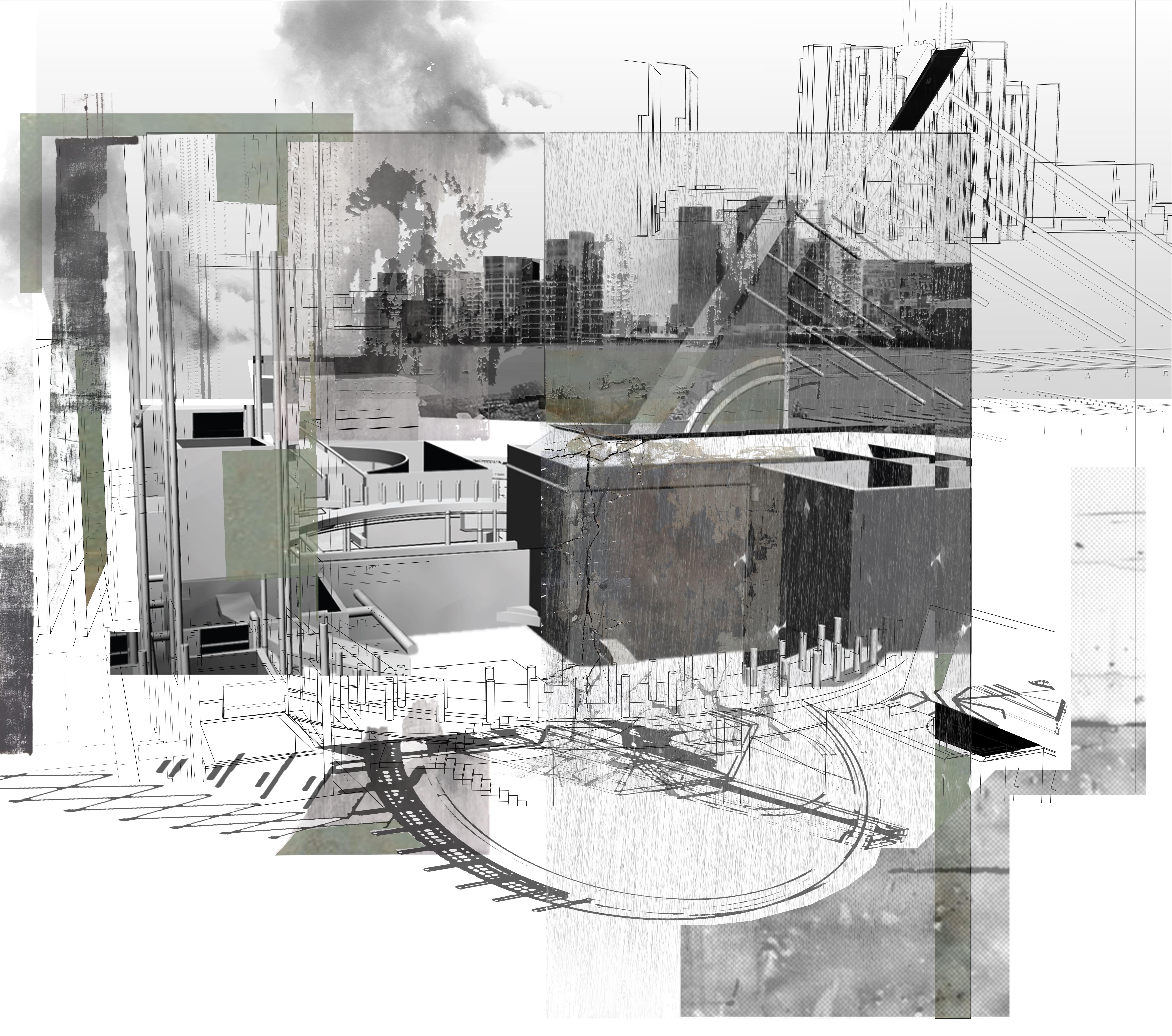
Climate Driven Architectural Expression
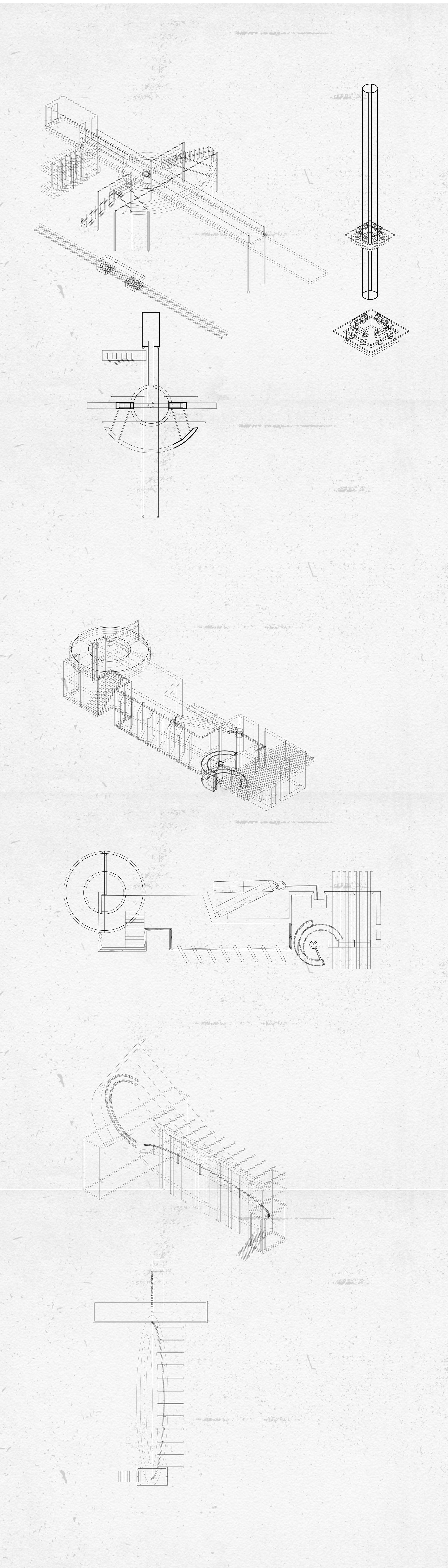
Initial Spatial Concepts
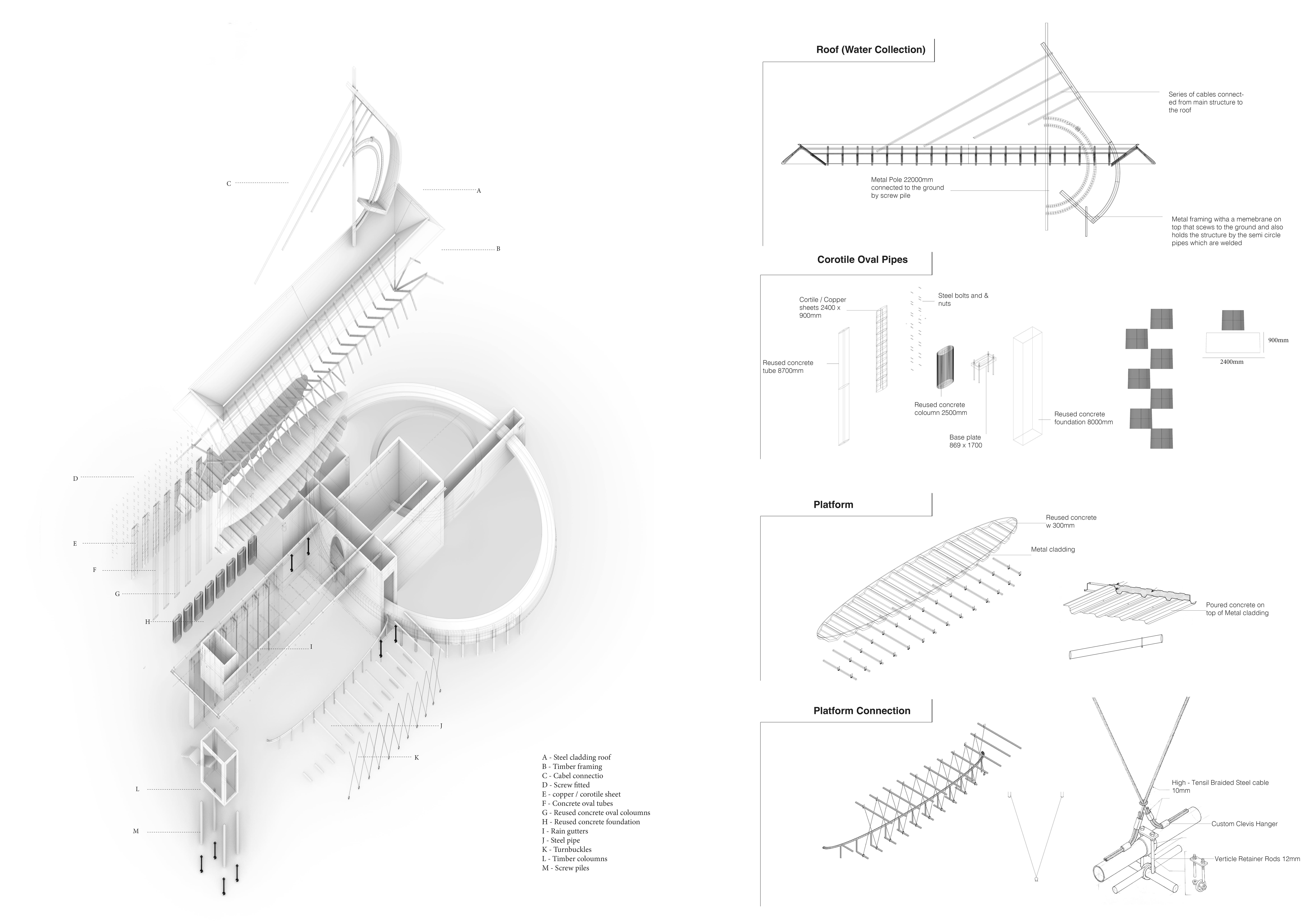
Exploded Axonometric of one the Spaces
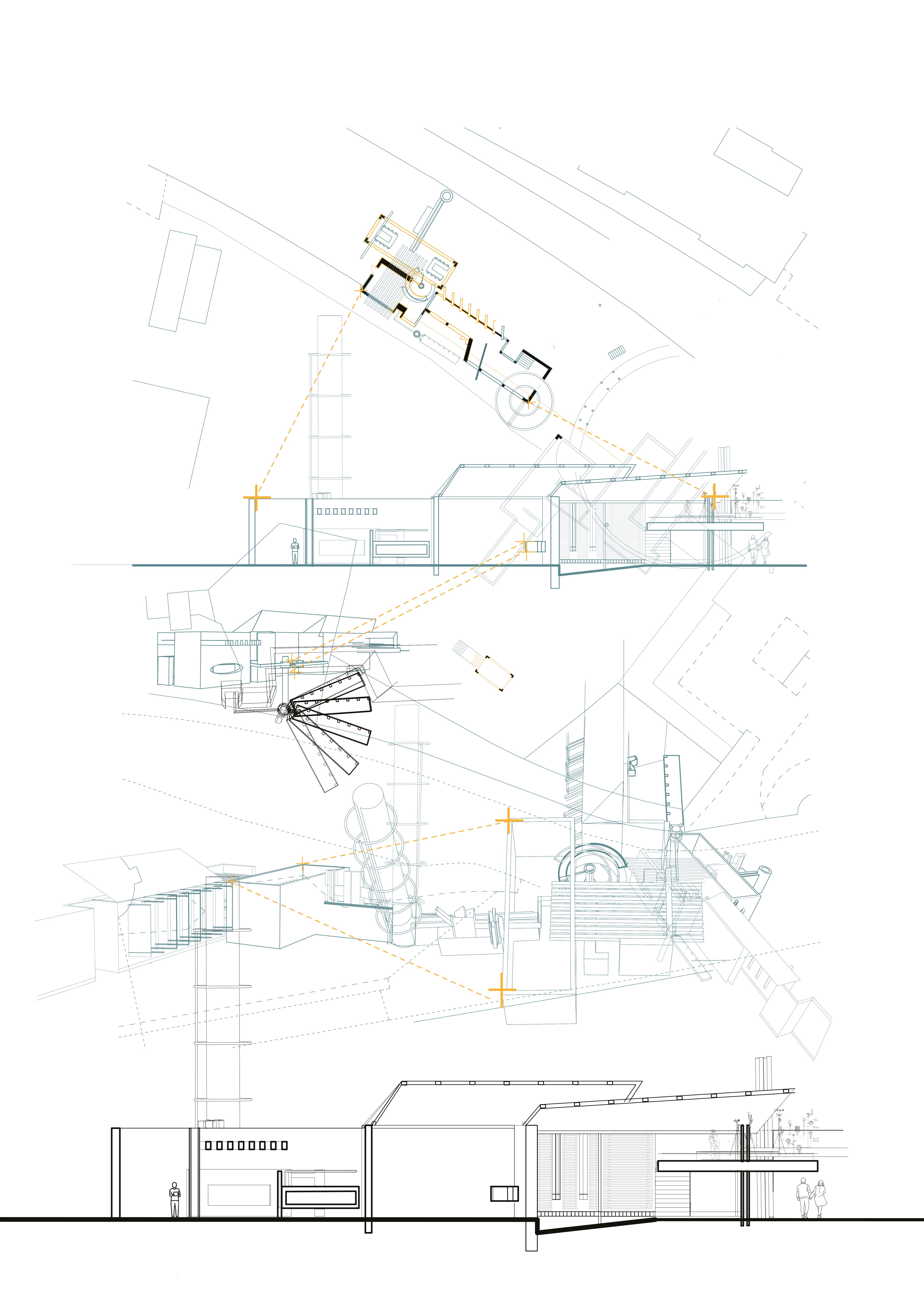
Plan & Perspective Movement Diagram
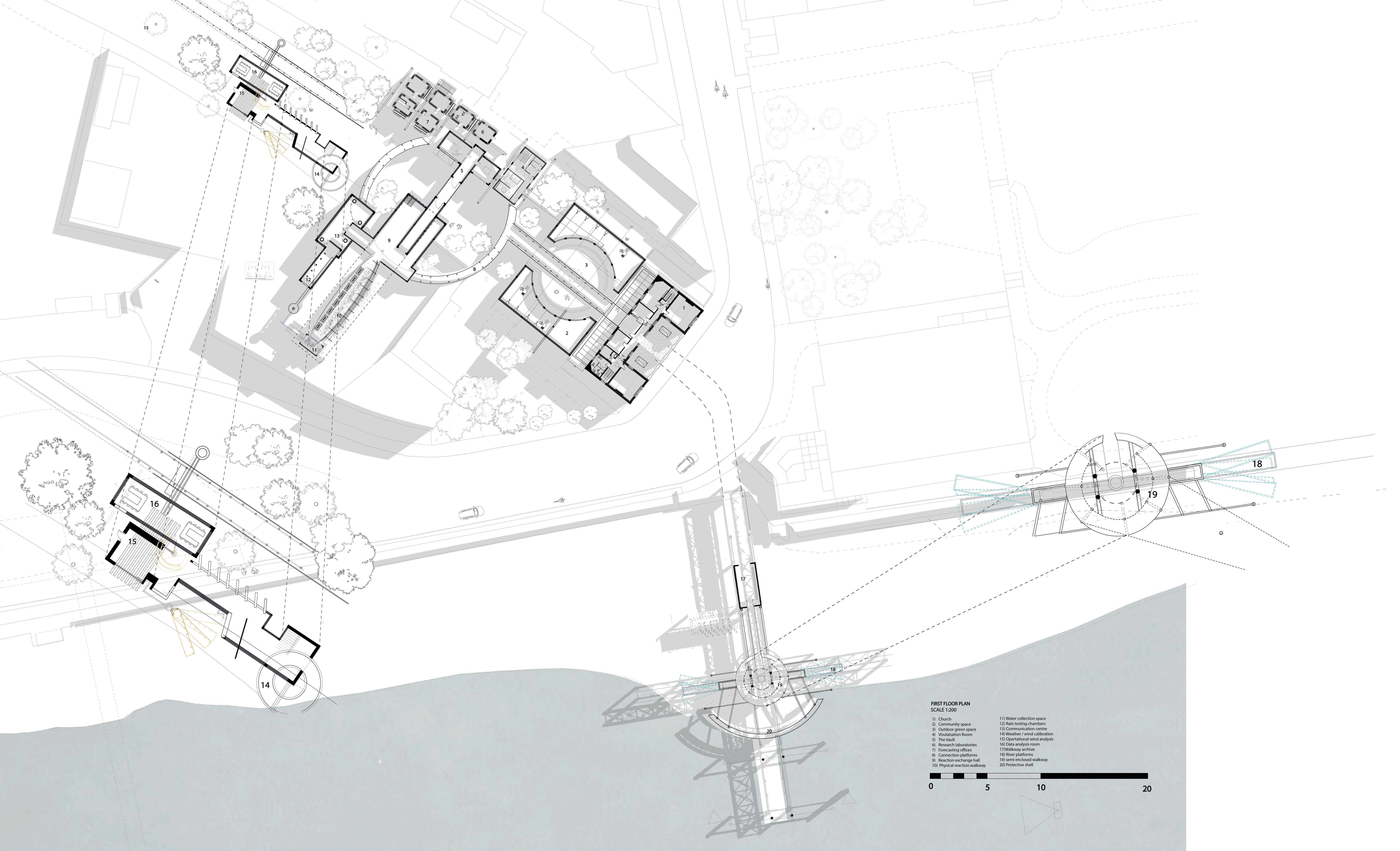
Motion Through Spaces