Expo 500: A Listening institution, an Oral Baazaar
Cem Uyal
My project stems from research into the Saz instrument and Turkish Aşık culture, where knowledge, stories, and traditions are transmitted orally rather than through written text. This led me to question how systems of notation emerge, evolve, and shape the way knowledge is preserved and communicated. Looking back into architecture, I realised that orthographic drawings remain the dominant method of recording and communicating space, prompting me to explore alternative forms of architectural notation through sound, vibration, and resonance.
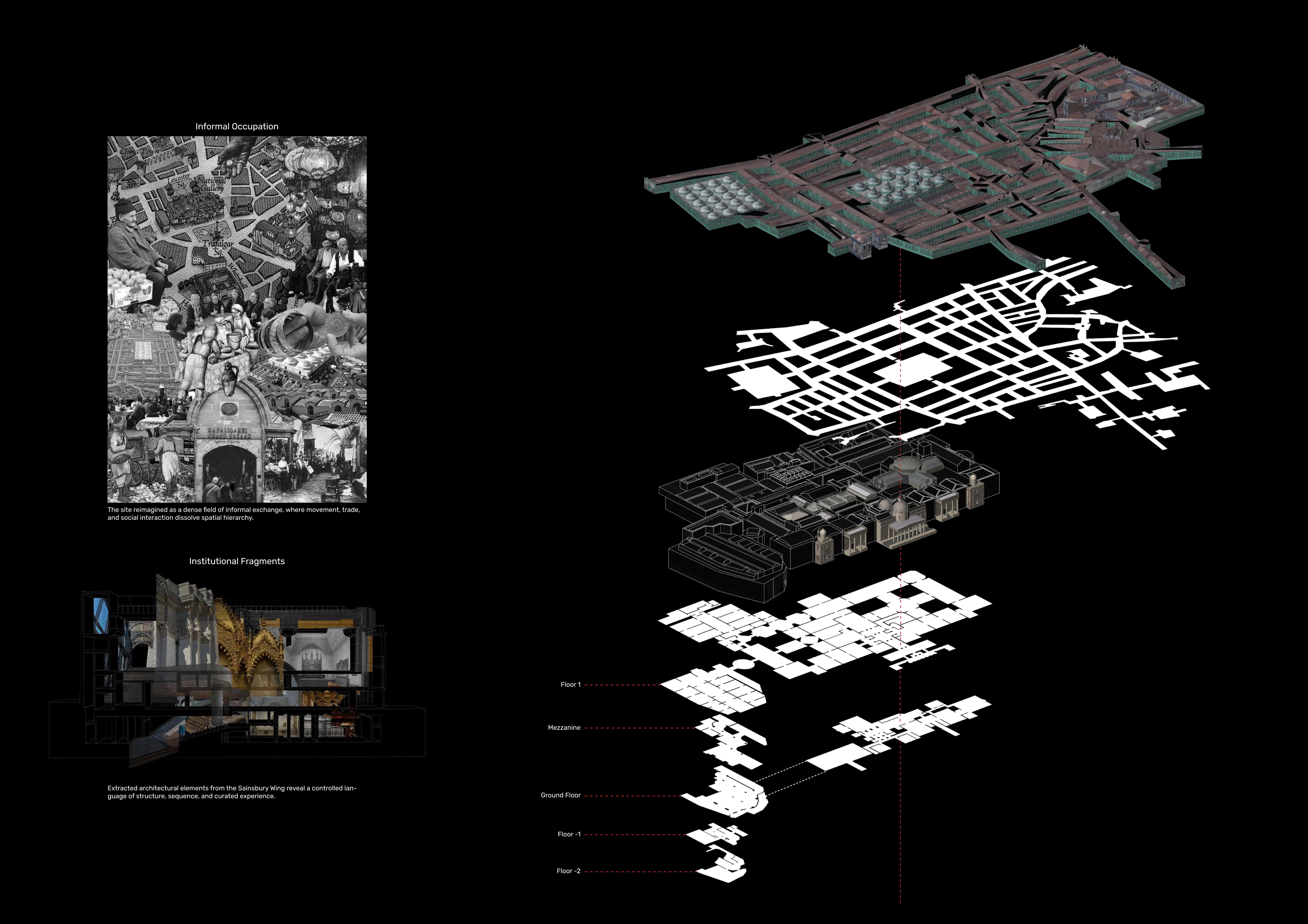
These investigations developed into The Listening Institution, an architectural extension to the National Gallery that reimagines the museum as a space centred around speech, memory, and exchange rather than static display. Positioned between the institutional order of the gallery and the informality of the bazaar, the proposal introduces the Oral Bazaar, a space where conversation becomes the primary architectural material.
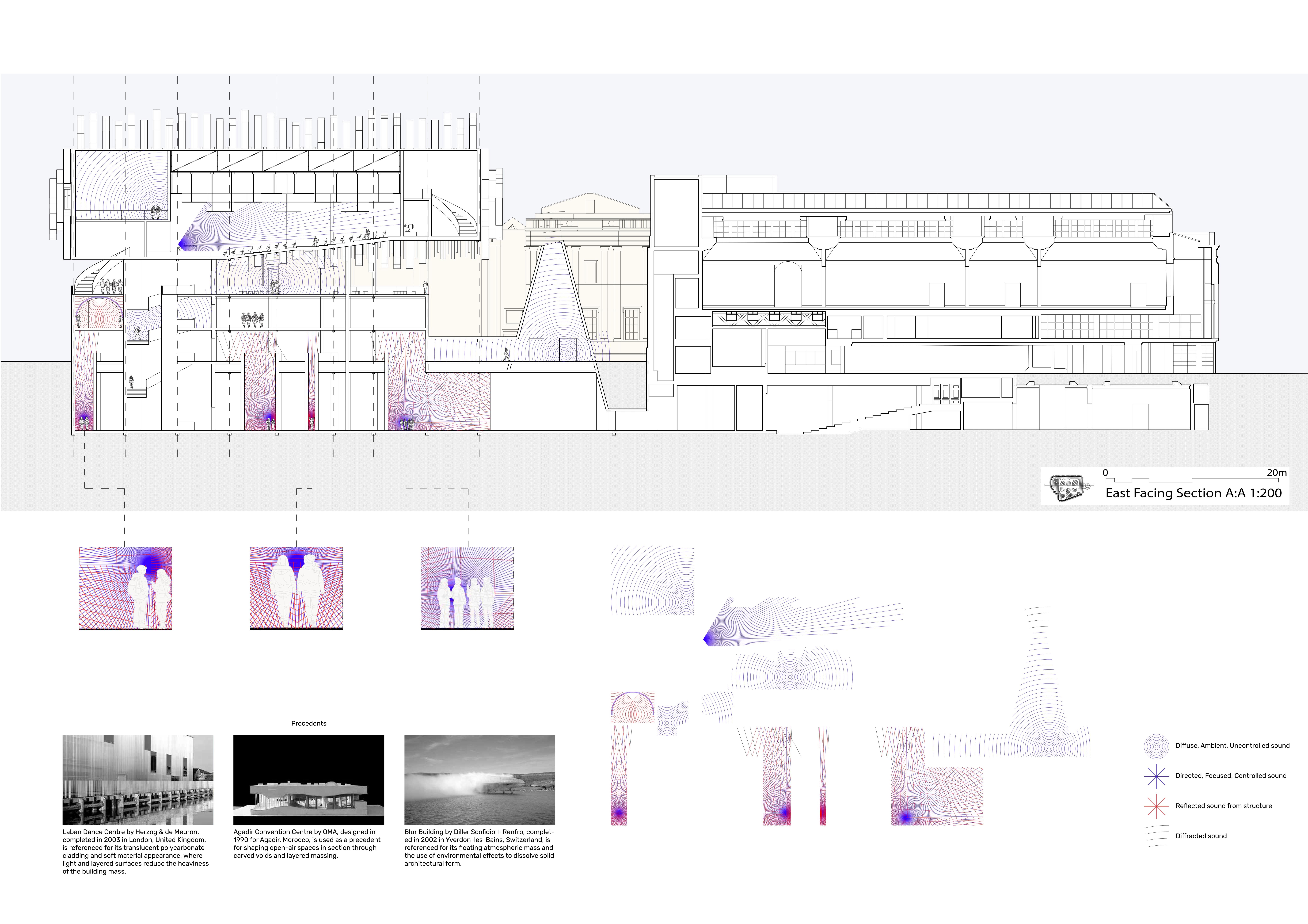
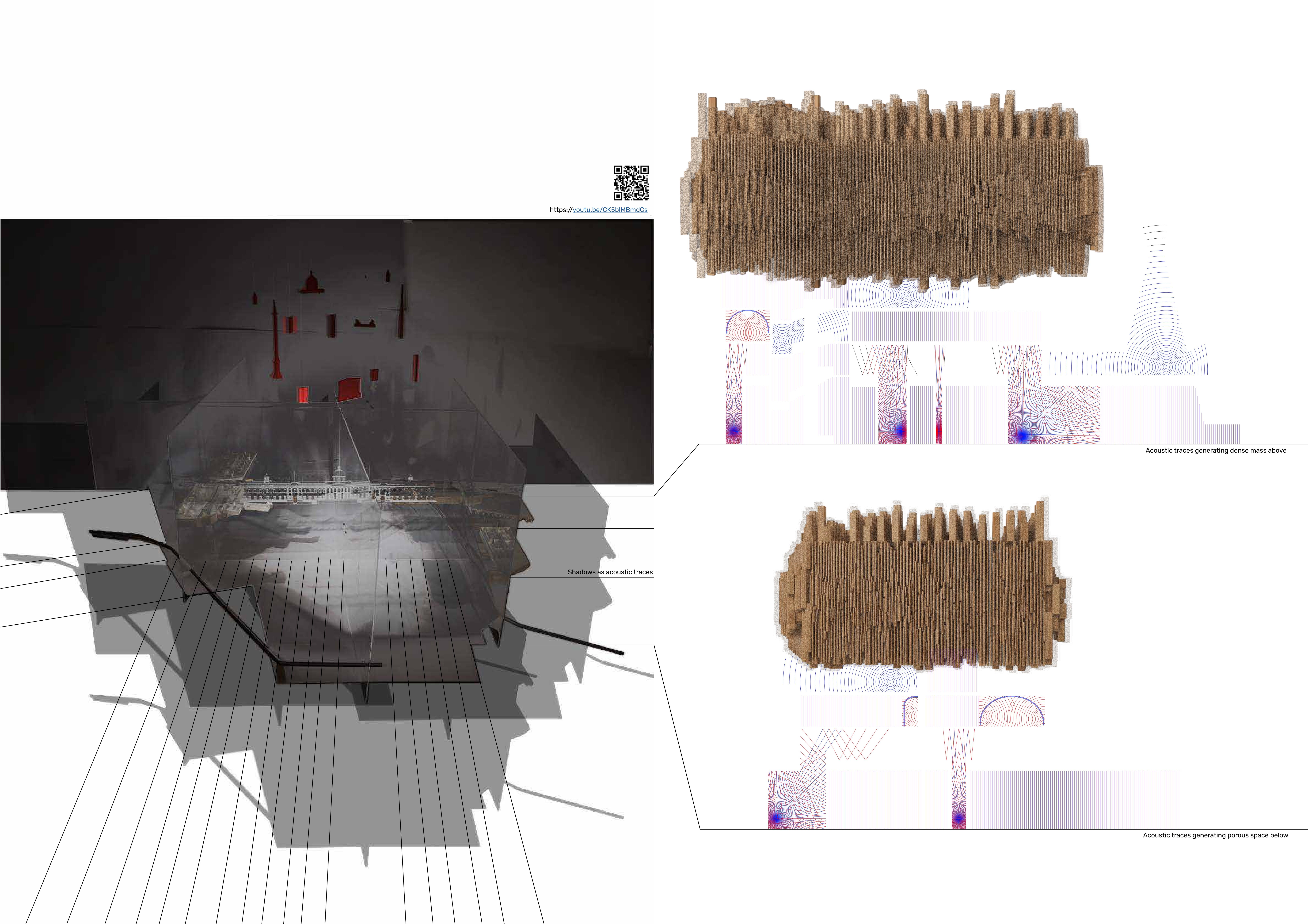
The project is organised through rooms calibrated to different scales of conversation, ranging from intimate discussions to collective performances and public gatherings. Acoustic studies, sound mapping, and material experimentation translate invisible sonic conditions into spatial form, allowing sound to shape circulation, atmosphere, and enclosure.
Rather than functioning as a silent container of artefacts, the proposal operates as a listening architecture: collecting, filtering, and redistributing voices throughout the building. In doing so, the project challenges conventional cultural institutions by positioning listening, participation, and oral exchange as the foundation of collective memory and cultural preservation.
Order and Informality
Acoustic Spatial Studies
Translating Sound into Space
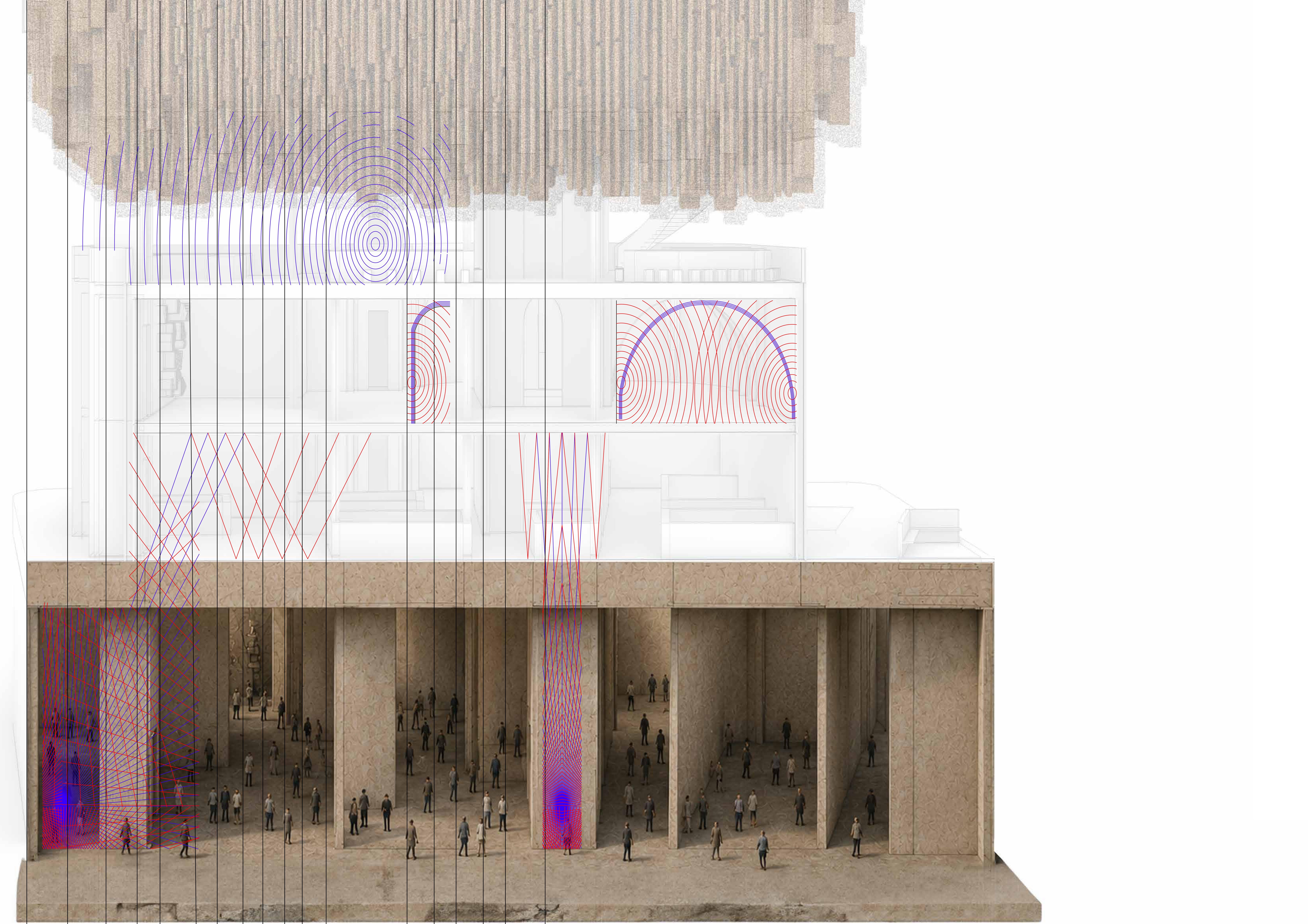
View from the Sainsbury Wing to the Oral Bazaar, where conversations occur and languages are kept alive
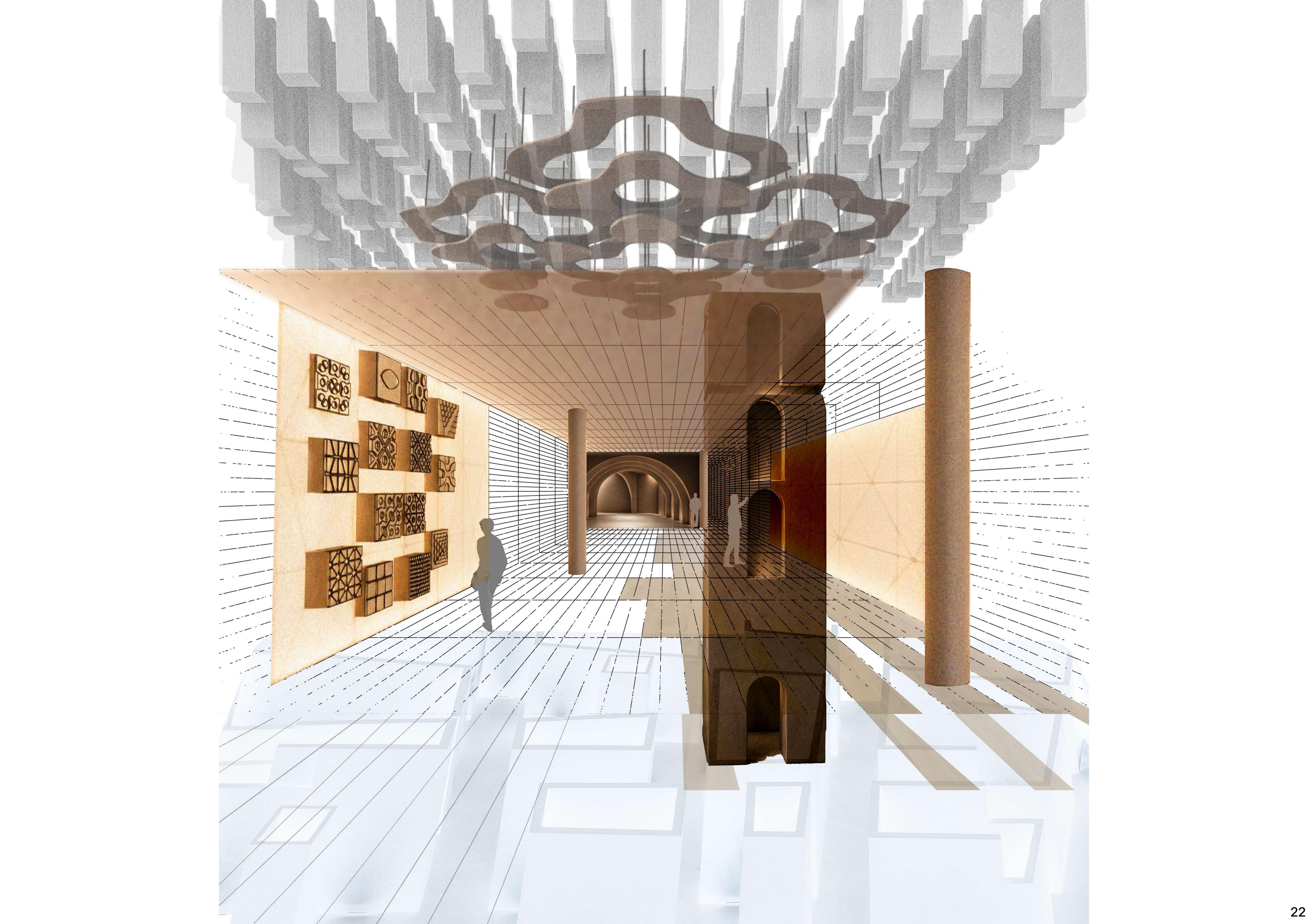
View to the First floor exhibition space