Harbour Resilience Early Years & Community Hub
Sana Shafique
Harbour Resilience Early Years & Community Hub is a climate‑adaptive educational and social building designed for families, preschool children, marina residents and wider community users at South Dock, Rotherhithe. The project responds directly to the site’s complex waterfront conditions, where operational boatyard activity, limited access, and projected 2080 sea‑level rise create both environmental challenges and opportunities for innovation. Rising temperatures, low existing thermal comfort and increasing flood risk shape the architectural strategy, driving the development of an amphibious structure that can safely rise with floodwater while remaining fully functional.
The design integrates a solar‑optimised form and a reed‑filter façade that improves daylight quality, reduces overheating and enhances biodiversity along the dock edge. Inside, the preschool supports nature‑based learning through daily planting, outdoor play and environmental exploration, while the community hub provides flexible spaces for adult learning, shared meals and intergenerational activities. Together, these programmes strengthen local cohesion and offer long‑term social value in an area affected by youth disengagement, low qualification levels and ongoing gentrification pressures.
A key feature of the project is its amphibious foundation system, which uses tall guide poles, streamlined stilts, buoyant steel drums and a timber raft base to ensure the building can float during extreme flood events. This transforms the hub into a safe, adaptable refuge during climate‑related emergencies. By combining environmental resilience, inclusive design and community‑centred programming, Harbour Resilience creates a forward‑looking model for early‑years education and social infrastructure in vulnerable waterfront contexts.
Sana Shafique is a final year BSc Architecture and Environmental Design student. Her design approach is evidence‑based, using environmental simulations (daylight, thermal comfort, ventilation) to guide decisions from concept to final proposal. Sana's primary focus is on mitigating overheating and improving thermal comfort through passive, climate‑responsive strategies.
Further, aiming to integrate architecture with the natural landscape, enhancing ecological systems rather than altering them. Every project is developed through measurable environmental performance, ensuring resilient, future‑proof design.
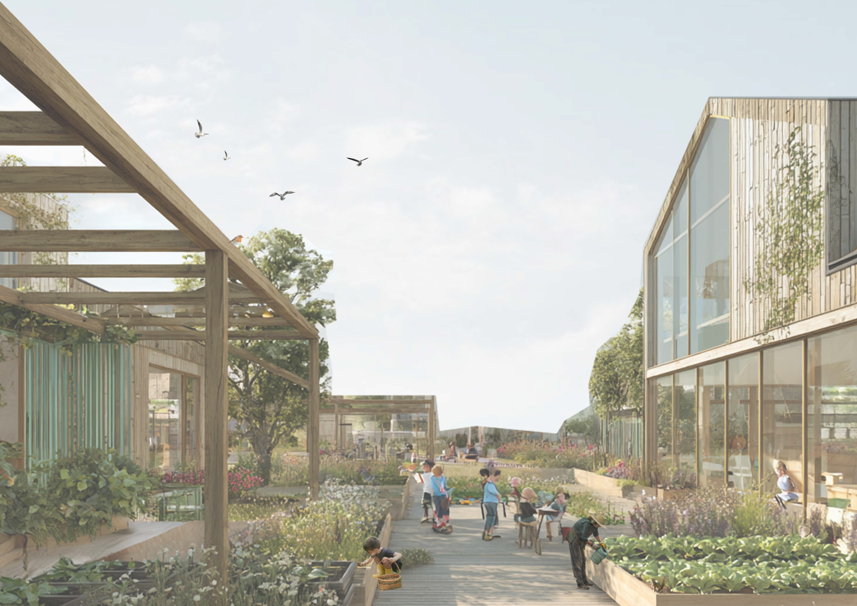
Community gardening space supporting daily planting, learning and social interaction through climate‑responsive landscaping and shared green infrastructure.
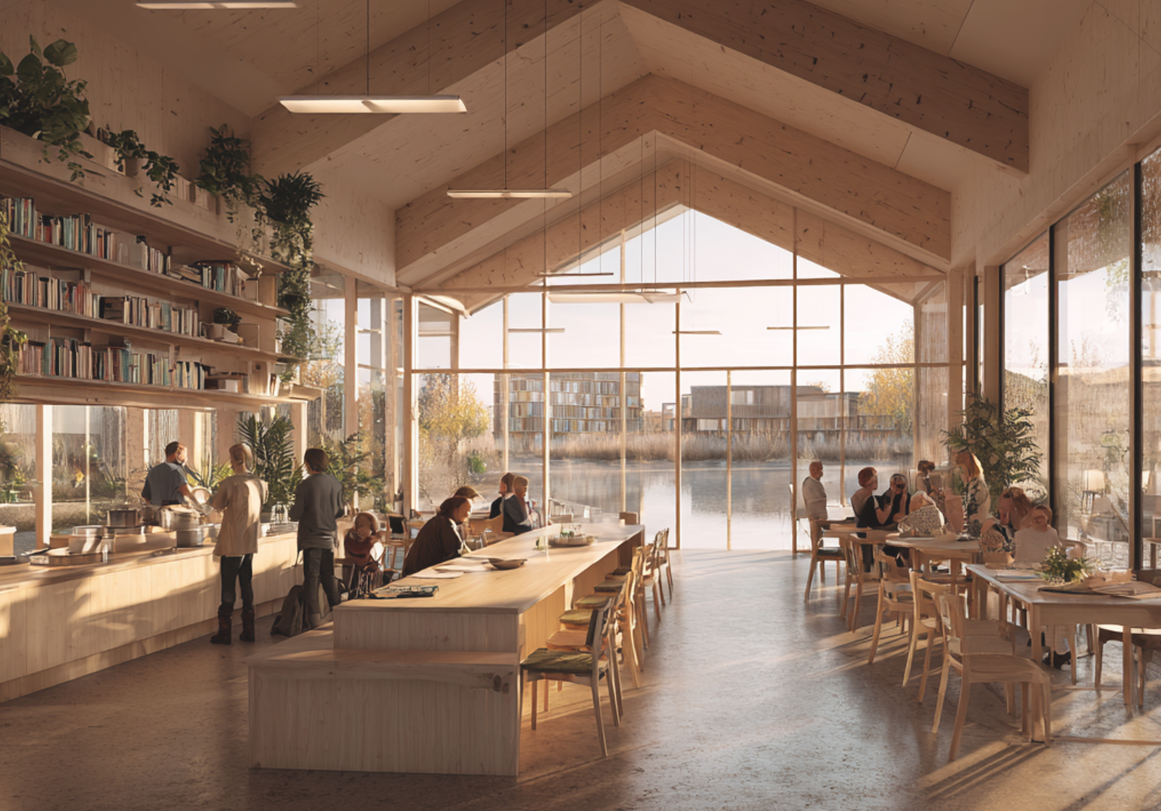
Community kitchen interior showing shared cooking, social dining and warm timber architecture designed to support intergenerational learning and daily community activity.
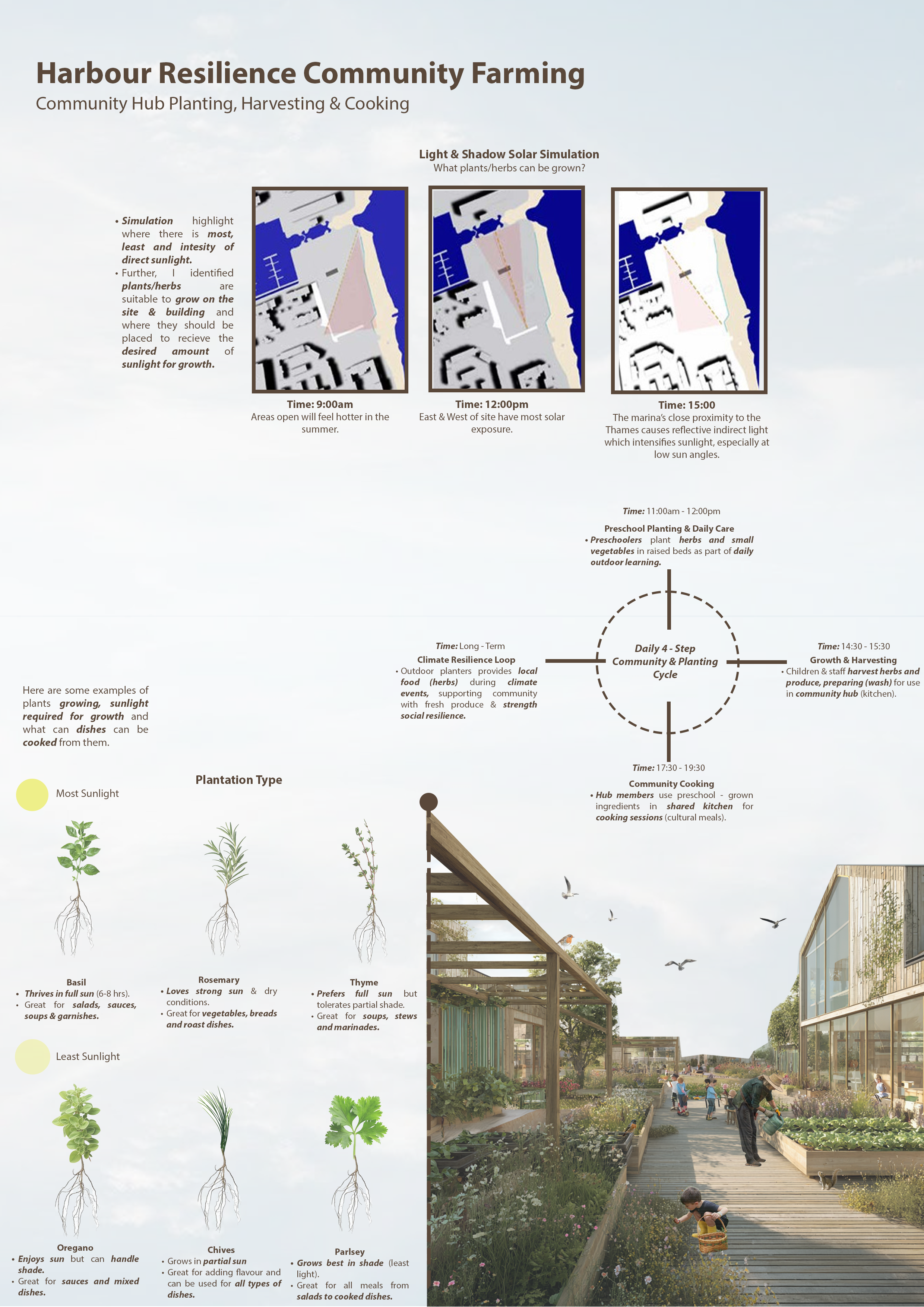
Community farming strategy combining solar‑simulation planting, daily growing cycles and shared cooking to strengthen environmental learning and social resilience.
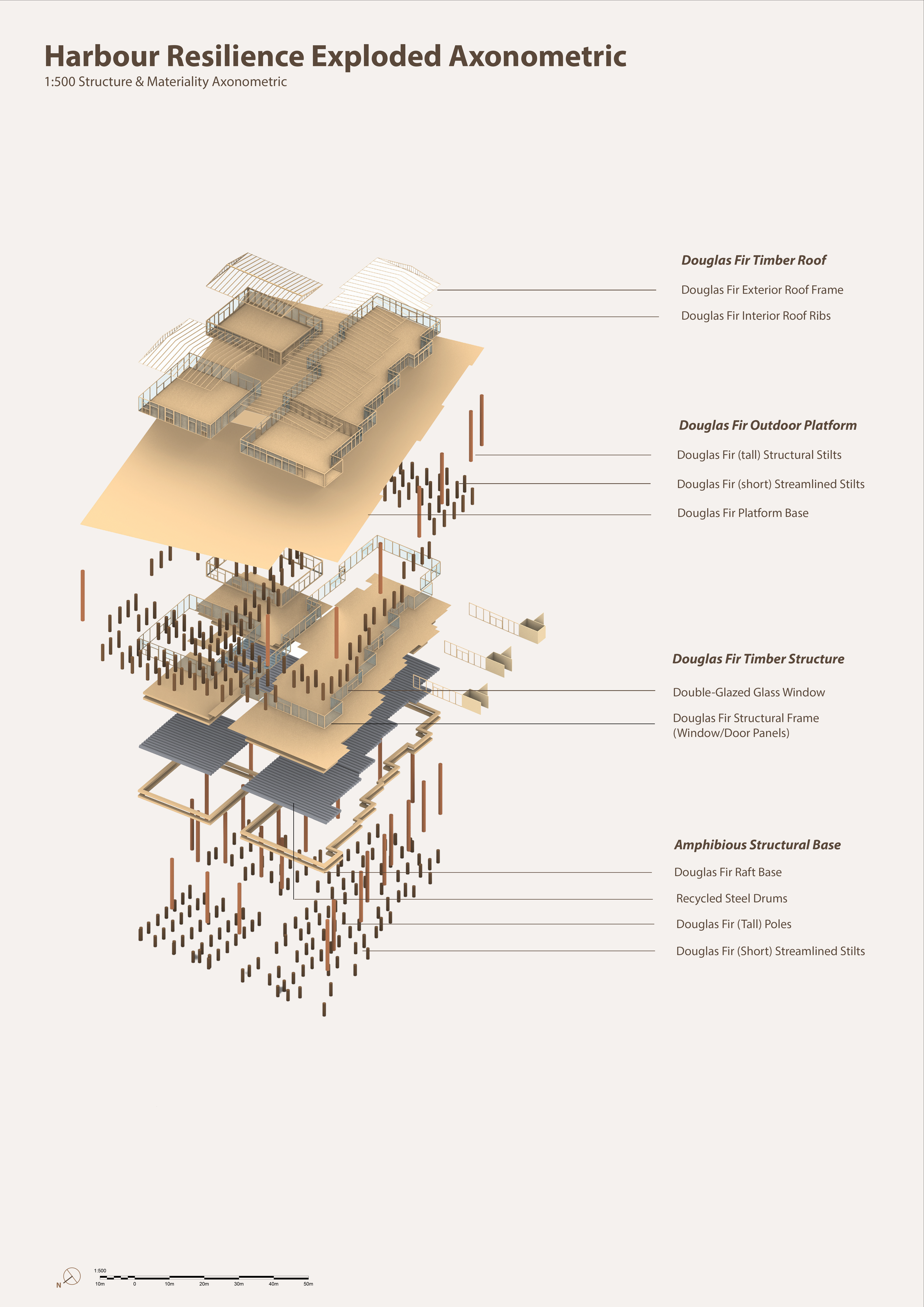
Exploded axonometric showing the full structural and material hierarchy of the Harbour Resilience Hub, illustrating the Douglas Fir timber system and amphibious base components.
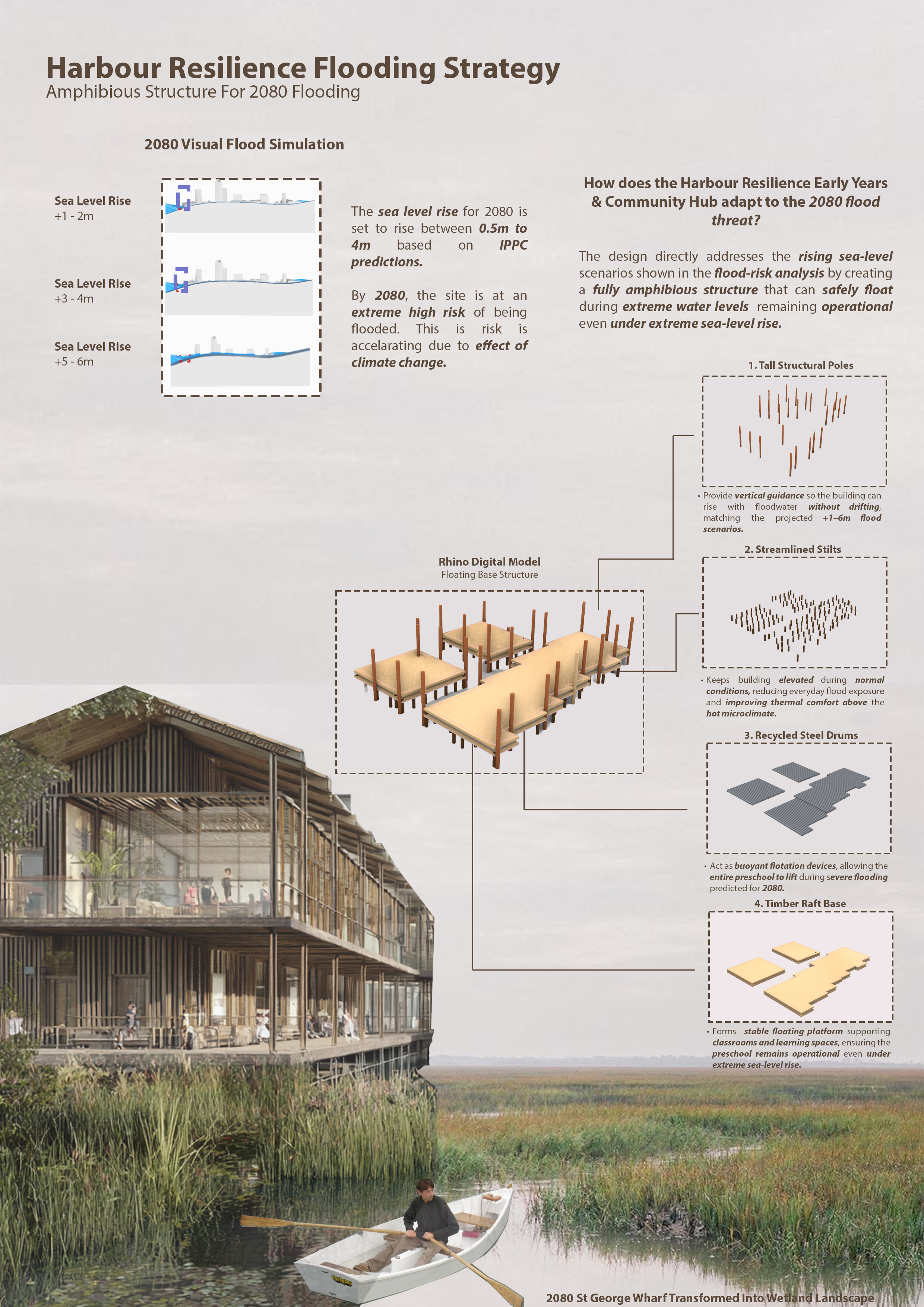
Amphibious flooding strategy showing how the Harbour Resilience Hub adapts to projected 2080 sea‑level rise through a buoyant timber‑and‑steel base, guided poles and elevated stilts
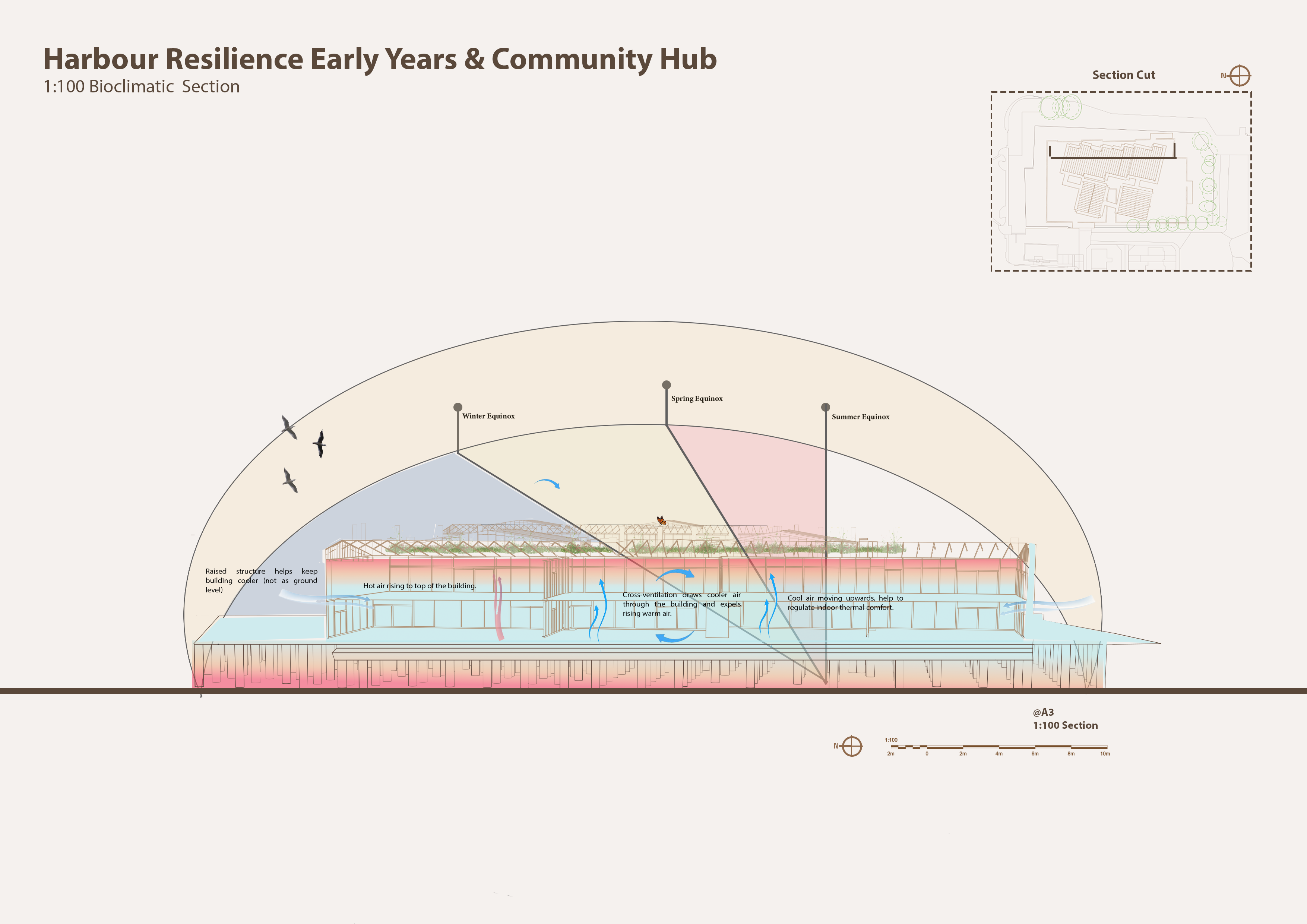
Bioclimatic section illustrating seasonal sunlight, natural ventilation and passive cooling strategies that maintain thermal comfort throughout the year.