Museum of scripts
Clevy Bento
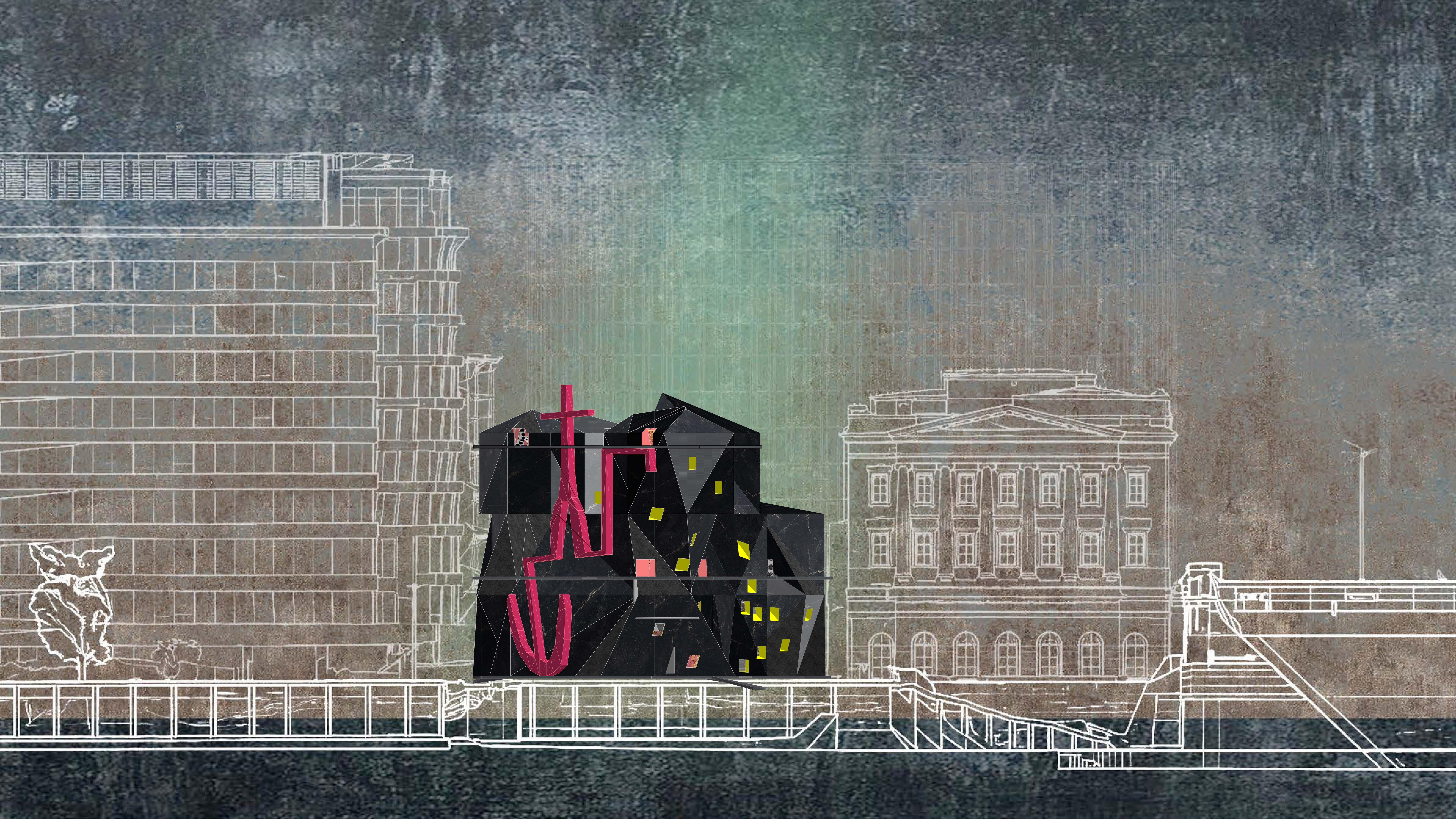
The Museum of Scripts explores language as a system of power, memory, and transformation rather than a neutral form of communication. Organised through sequences of compressed and expanded spaces, the architecture reflects how language evolves, controls, and shapes civilisations over time. Located at a historic intersection of the River Thames, London Bridge, and guild institutions, the site represents the convergence of economic, legal, religious, and social systems, where language historically operated alongside commerce and governance as a tool of authority and exchange.
The project draws conceptually from the branching structure of Indo-European languages and the west-to-east flow of the Thames. The river’s main stream forms the museum’s structural spine, while tributary-like offshoots represent languages that have evolved, fragmented, disappeared, or spread globally. These river geometries are translated into subtractive and extruded forms that shape exhibition spaces and circulation routes, creating architectural experiences that function as “linguistic conditions” rather than static galleries.
Five London sites symbolically contribute inscriptions to the museum, each representing different forms of power through language: religion, commerce, law, resilience, and public exchange. Individuals connected to these sites carve scripts into the architecture, allowing the building to accumulate diverse social voices over time.
The project expands on earlier research into hidden body-temperature data and coded systems, shifting the focus from the individual body to the city itself. It investigates how information, identity, and authority are continuously inscribed onto both bodies and urban environments.
Threshold of Scripts
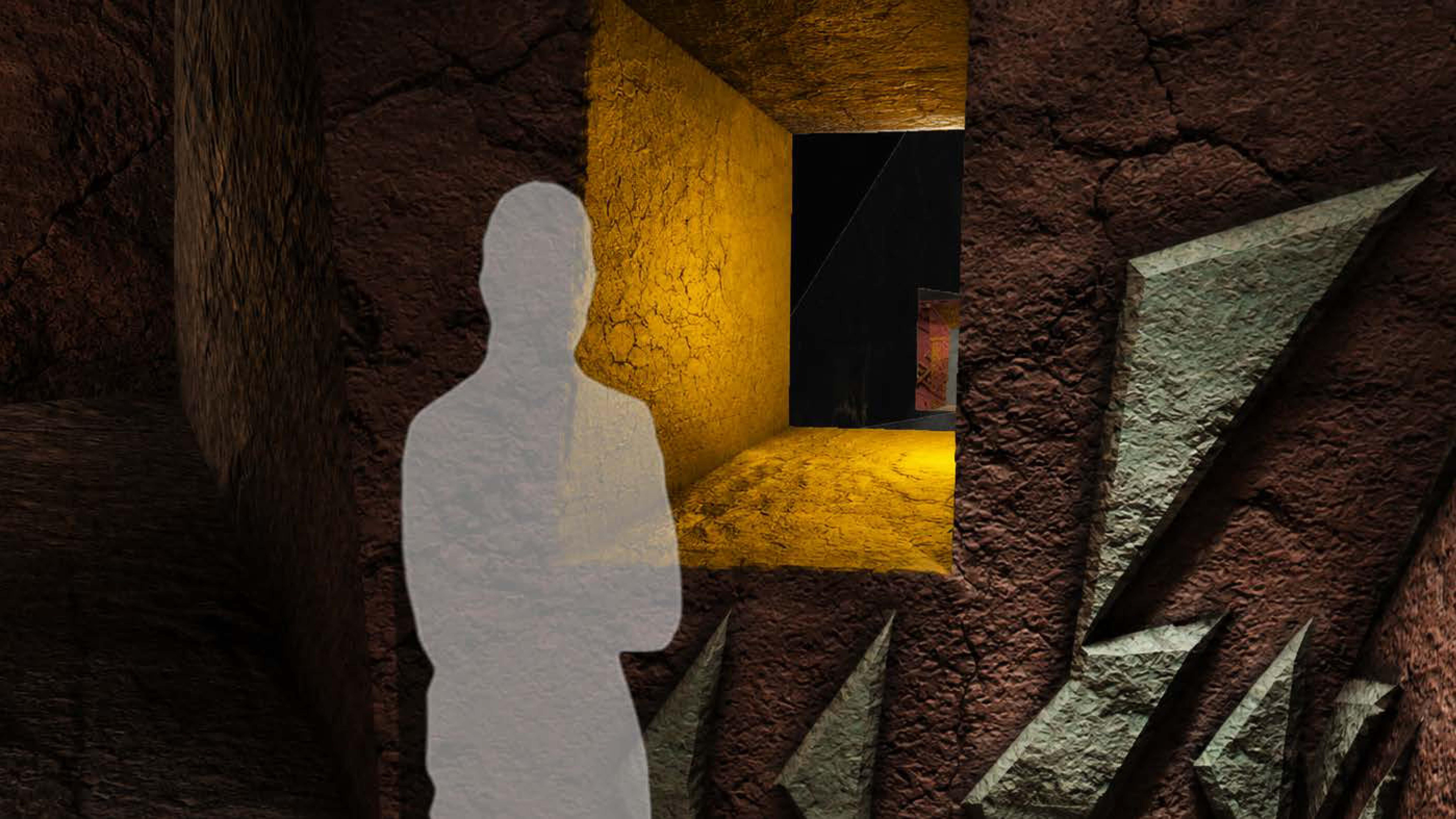
The Window of Observation
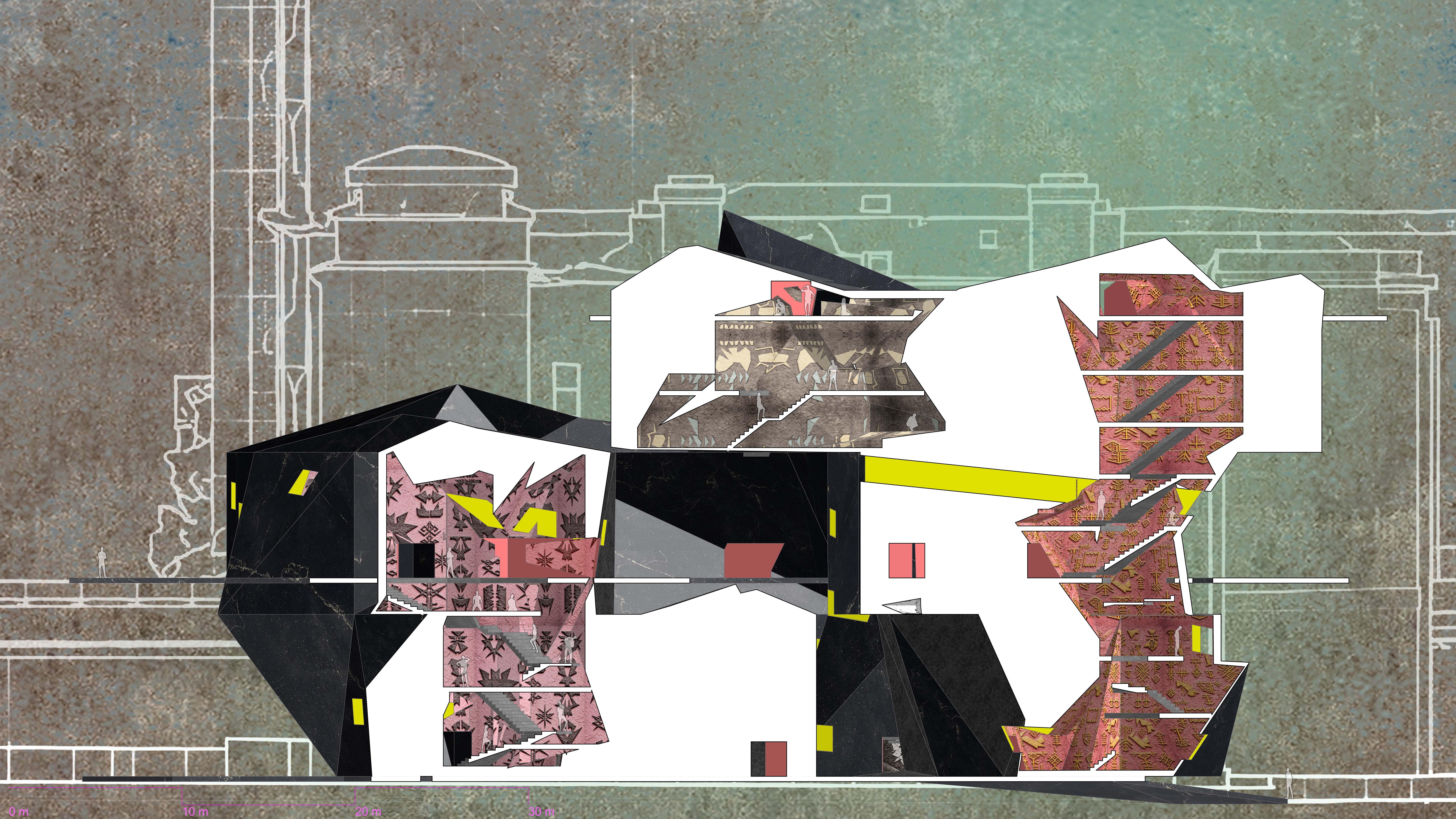
Section Through Linguistic Tributaries
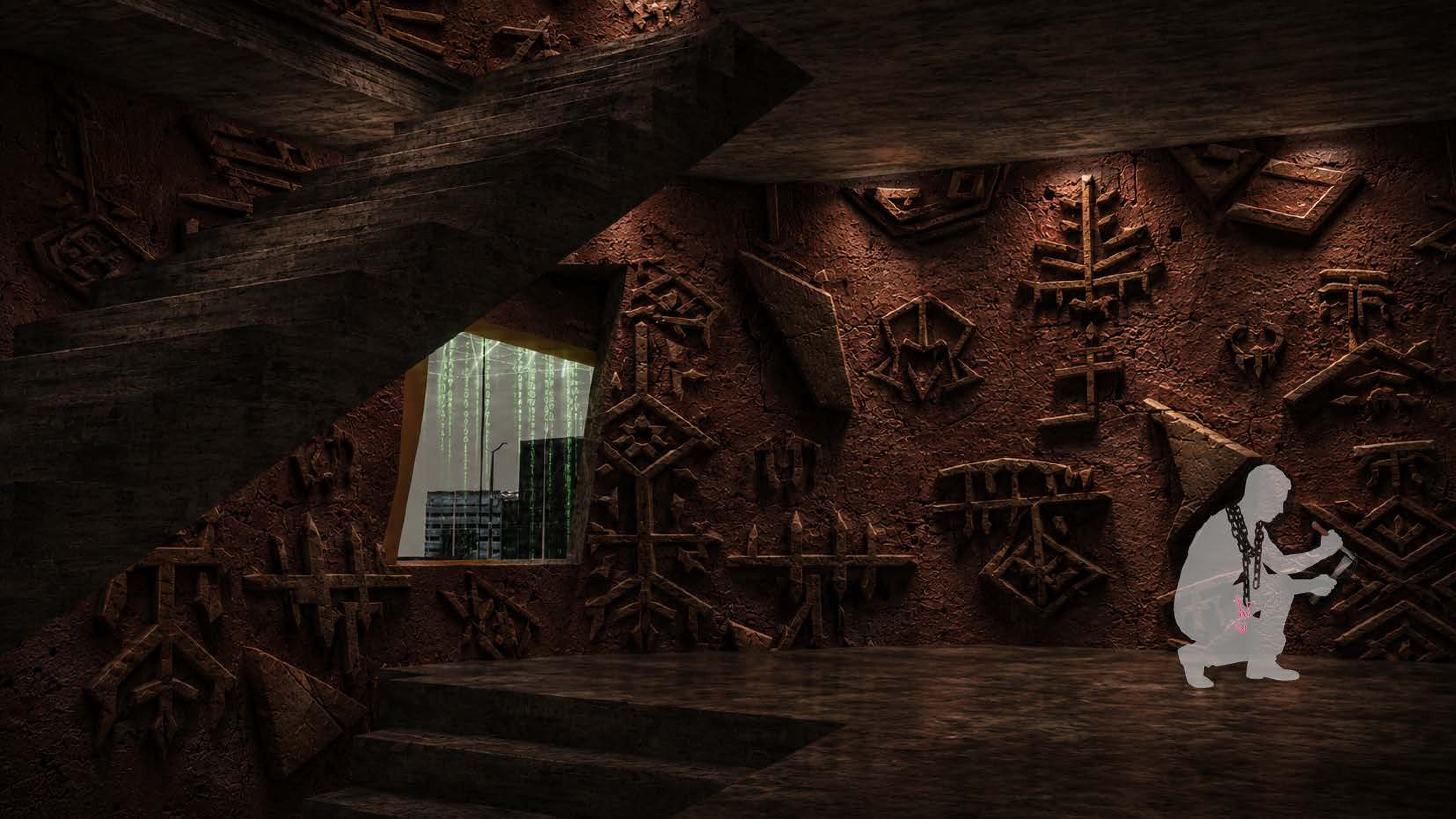
Encoded Continuum
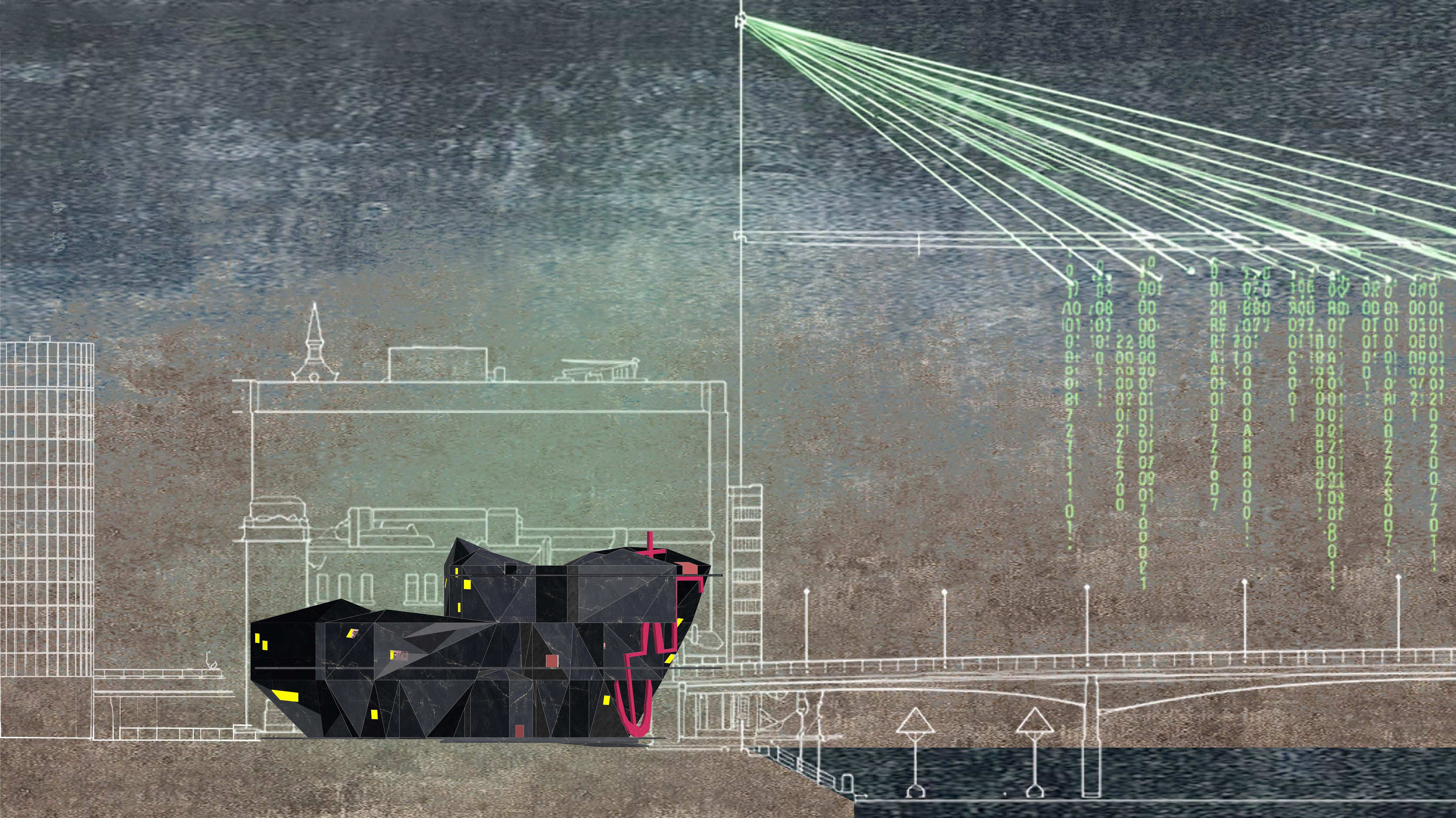
Confluence of Codes
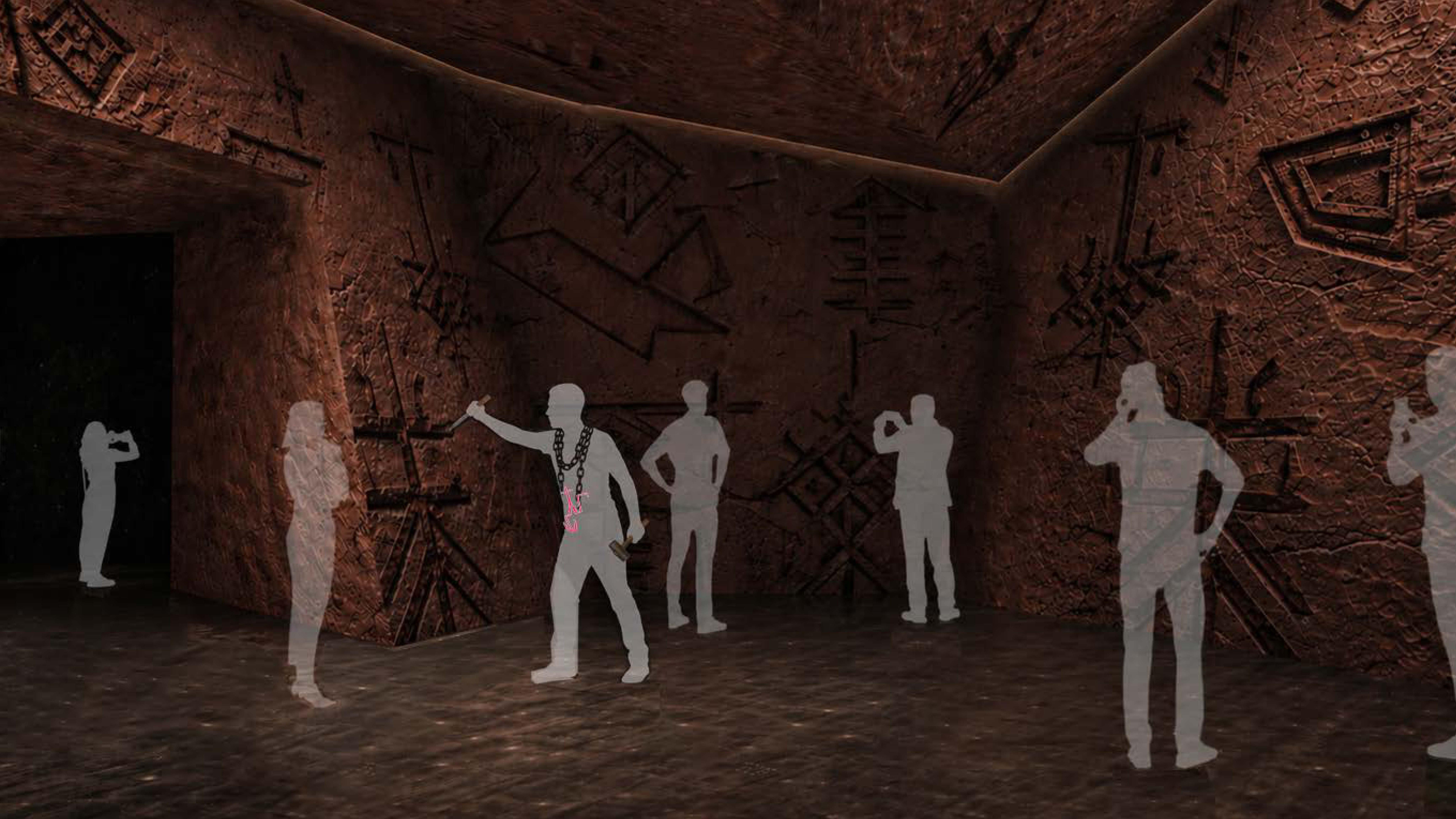
Chamber of Fragmented Voices