Post - Protocol
Owen William Burrell
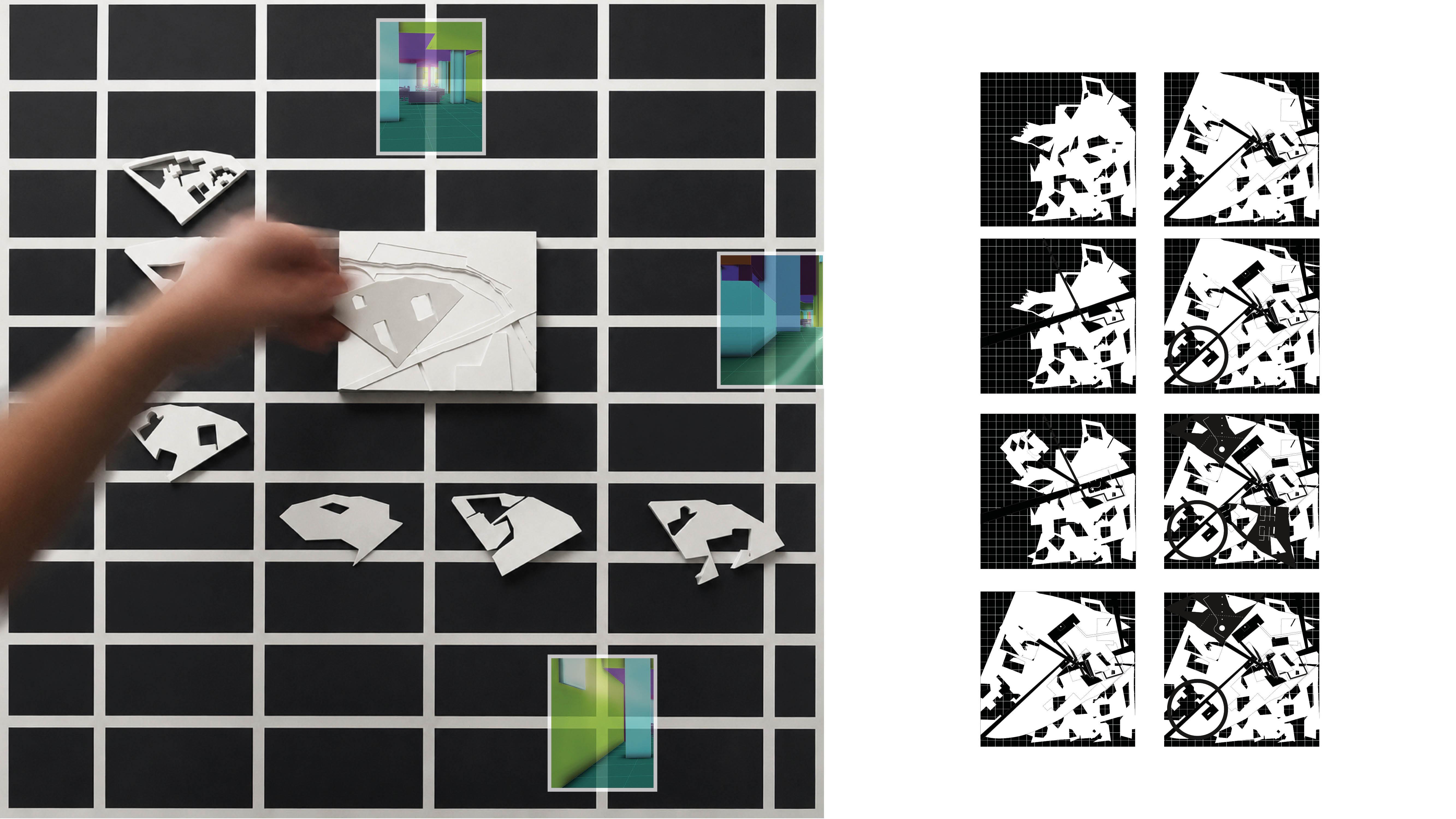
Post–Protocol reimagines a post-industrial island in Leicester as a new civic territory, questioning how public investment within regional British cities is increasingly shaped by private interests, technological agendas and economic profitability. Once central to Leicester’s industrial identity, Frog Island now exists as a fragmented landscape of vacant warehouses, declining infrastructure and underused public space. The project challenges the disparity between regional cities and heavily funded developments elsewhere, asking why places with similar spatial conditions often receive dramatically different levels of investment.
Central to the proposal is the Office for Network Sustainability (ONS), a speculative AI institution developed as a continuation of previous research. Publicly presented as an organisation promoting sustainability, innovation and civic benefit, the ONS instead operates through carefully curated transparency, using environmental rhetoric and public programmes to legitimise technological infrastructure and avoid scrutiny.
Drawing from emerging government initiatives such as Artificial Intelligence Growth Zones (AIGZ's) and Critical National Infrastructure (CNI), the project critiques a planning environment in which funding and regeneration are increasingly tied to technological relevance and market potential. Hidden AI and data infrastructure is embedded within retained industrial fabric, using these systems to attract investment while minimising the environmental impact associated with large-scale data development. Through adaptive reuse and careful interpretation of Leicester's public needs, existing structures become spaces for sport, commerce, education and community activity, creating a civic landscape that simultaneously delivers public benefit while exposing the political conditions through which regeneration is selectively enabled.
I’m interested in architectural and urban thinking, with a focus on masterplanning and how cities are shaped through systems of movement, access and everyday use. A key concern in my work is improving mobility and accessibility and how spatial design can create more connected and legible environments. I’m also drawn to contemporary architecture that responds critically to context, materiality and urban condition, balancing formal clarity with complexity. Coming from Leicester, a now post-industrial city, has altered my interest in how urban environments evolve and are continually redefined through infrastructure, development and long-term change.