RE-MAKE
Flavia Furnica
RE-MAKE proposes a self-sustaining maker community and workshop within an active industrial waste dock. The project responds to the crisis of the 'useless class'—the growing population of young architects, engineers, and creatives displaced by automation and digital dependency. Rather than treating this group, or the site’s waste, as a burden, the proposal reimagines the dock as a productive ecosystem that integrates waste processing, physical craft, and cooperative living into a single architectural loop.
The project builds upon an exploration of the 'unfinished,' treating the building not as a static monument, but as an ongoing, open-source process. Instead of full demolition, existing steel storage units are disassembled and harvested on-site, embedding the physical memory of the dock directly into the new architecture.
Organised along strict linear strips, the ground floor opens clear paths from the road to the river, repairing a broken waterfront link and inviting the public to spectate this new way of life. While heavy waste compaction is moved underground to eliminate noise and odor, a lifted, bolted glulam grid allows the community to adapt over time, slotting in permanent CLT housing pods and temporary apprentice spaces. Connected by mezzanine and gravity-fed waste tubes, the proposal explores how architecture can restore creative autonomy.
Through industrial upcycling, structural disassembly, and metabolically responsive design, RE-MAKE explores how architecture can create purpose and belonging not only for a displaced creative class, but also for the physical material systems increasingly excluded from urban life.
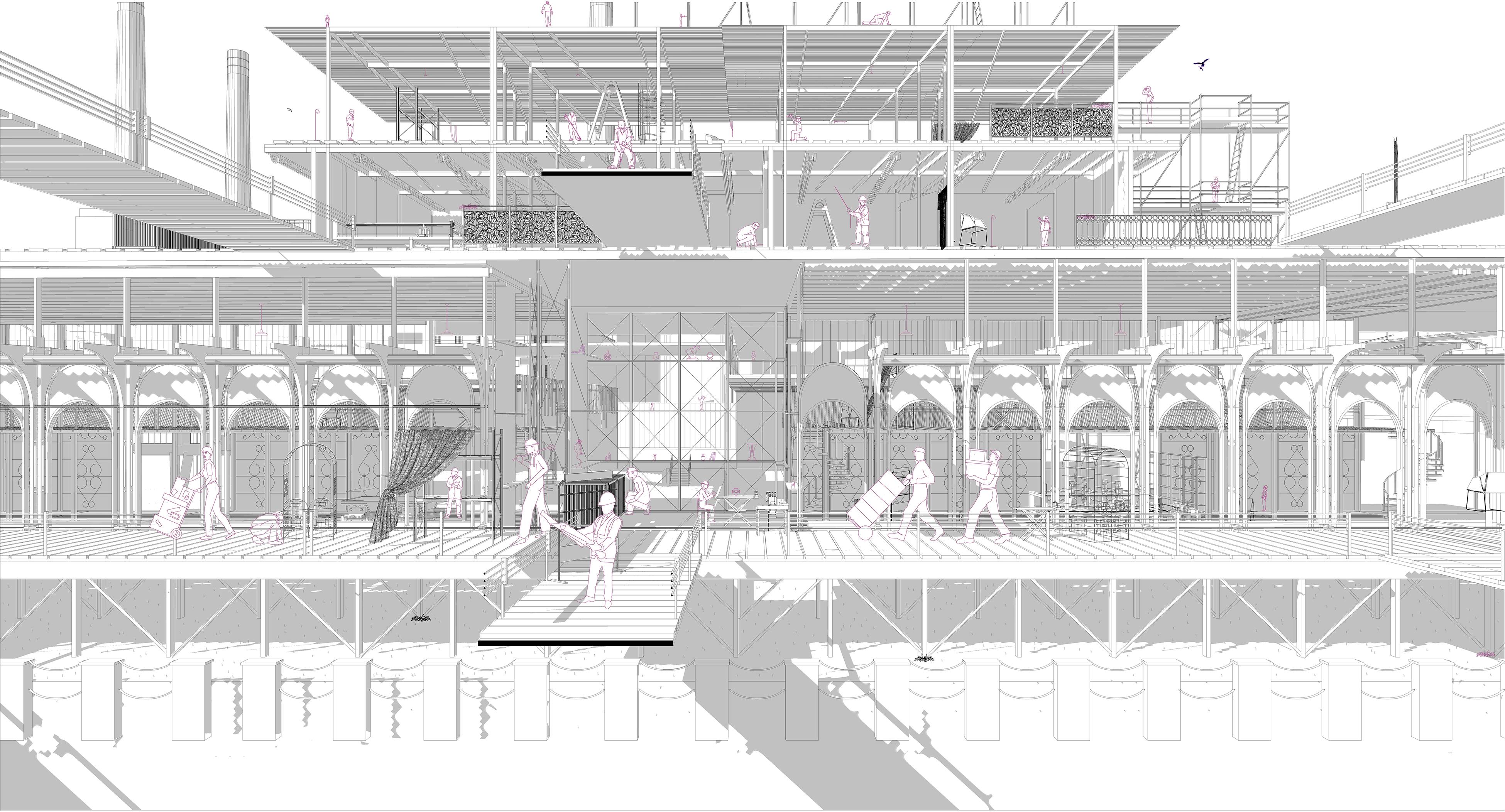
Conceptual Section of the Construction Sequence
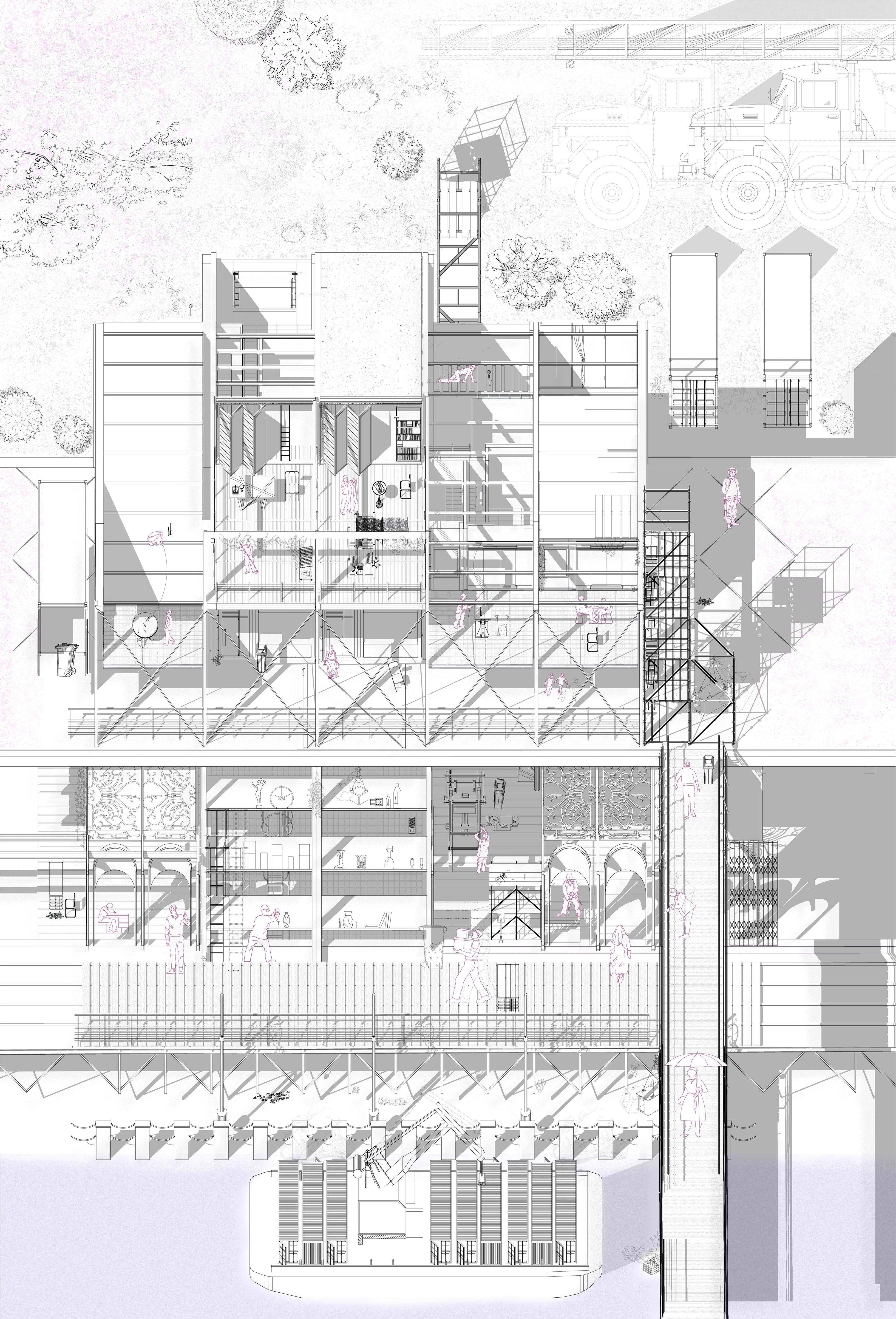
Sectional Planometric of Live/Waste/Work Condition
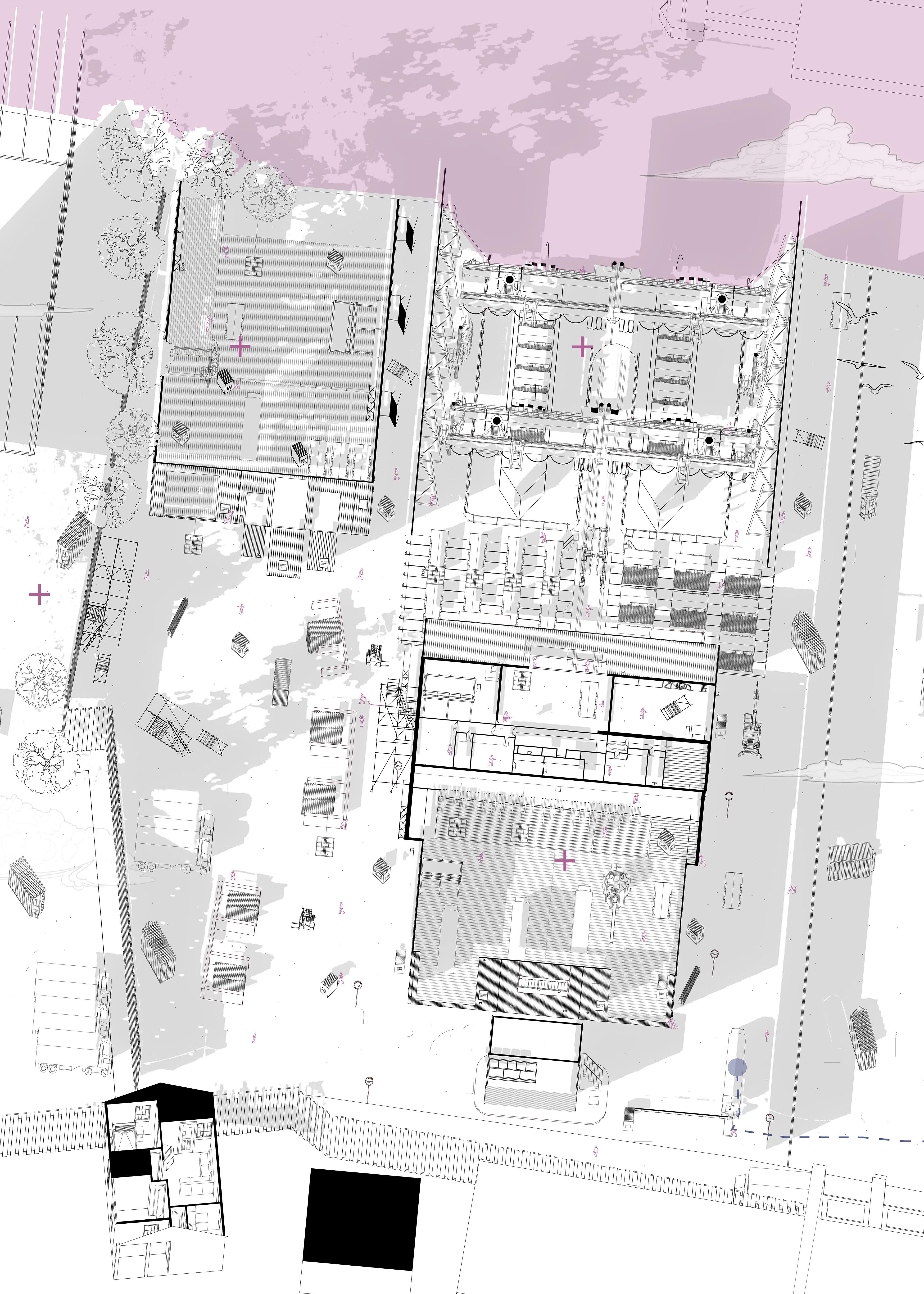
Investigation of Material Re-use on Existing Site
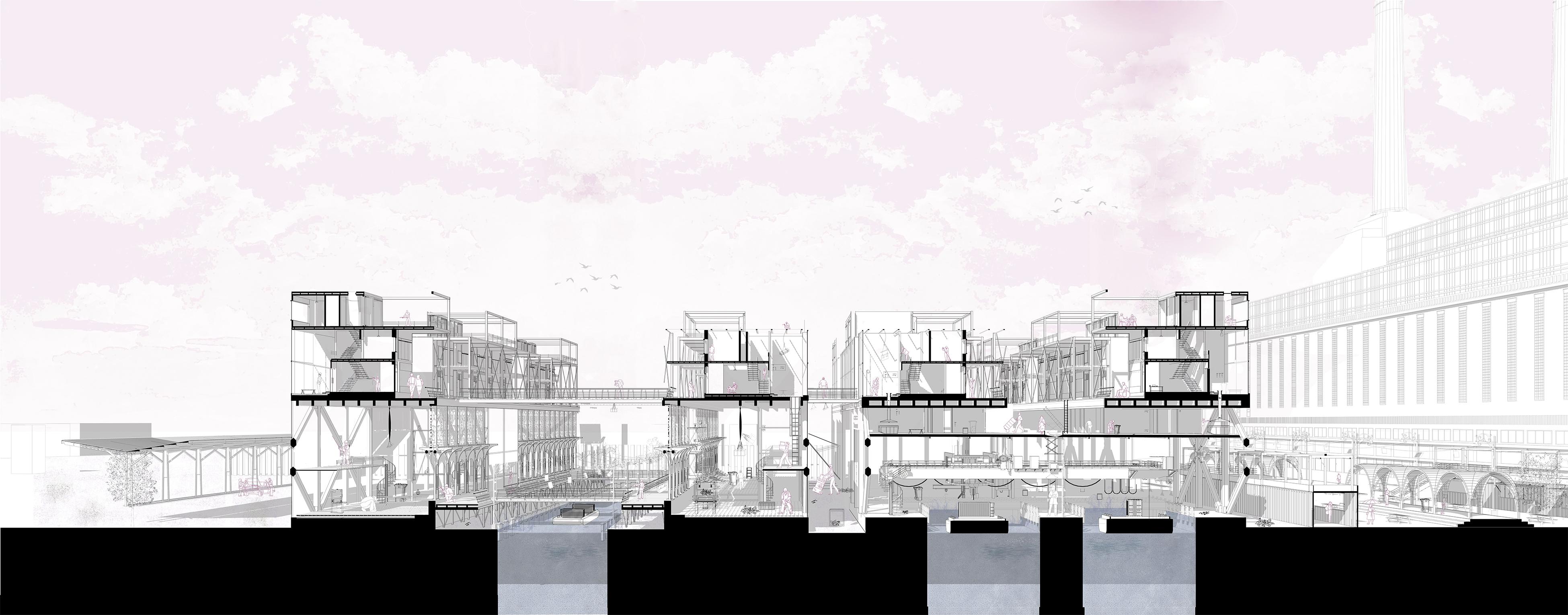
Proposal Cross Section
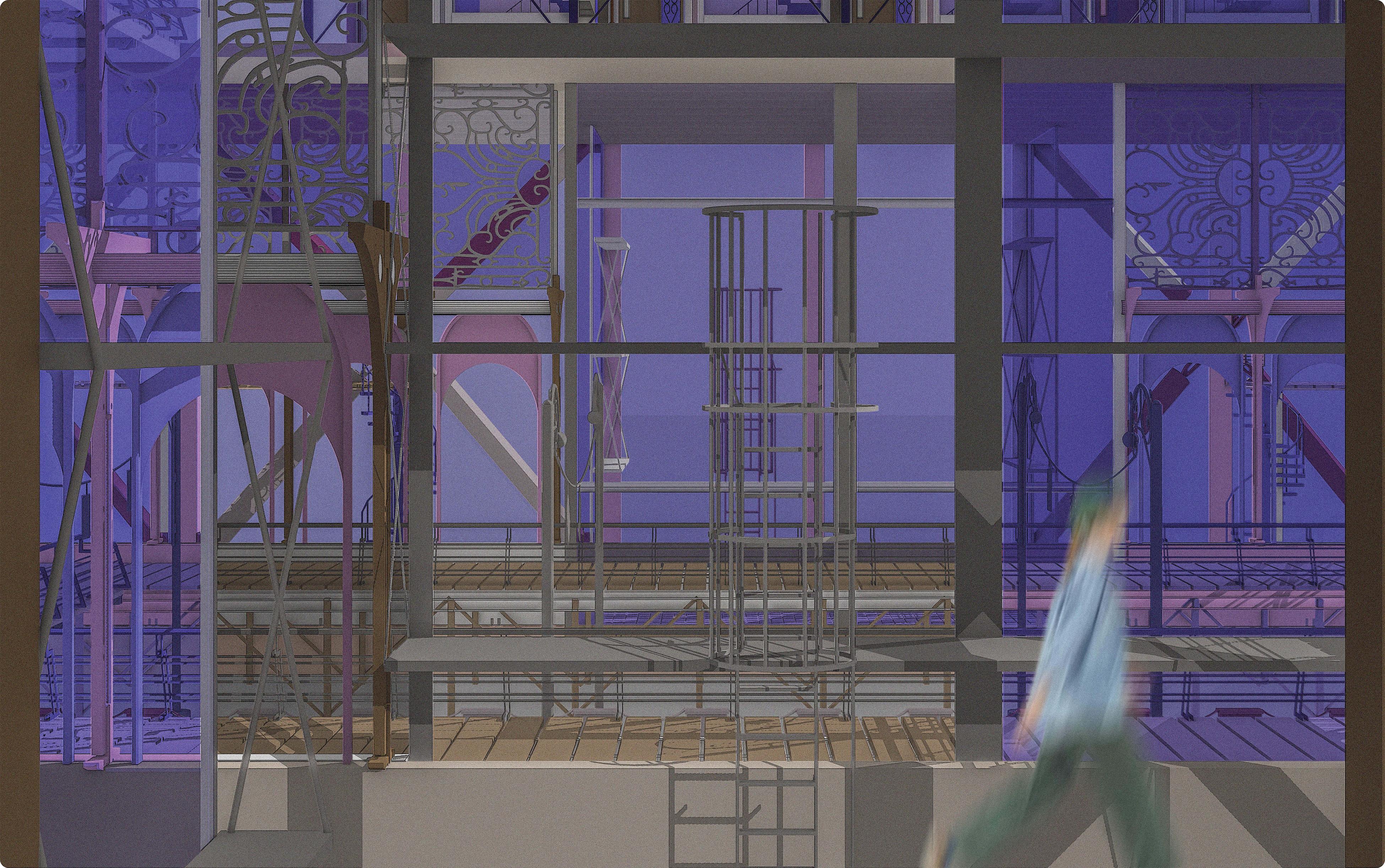
Interior View of Workshop Area